Join Us This Sunday!
Experience the Spirit's presence, powerful teaching, and authentic family at Awake Nations. Join us Sunday at 10am. Pastors Glenn & Lynn Bleakney.

Part One: The Global Story and What "Church" Actually Means
This is the first of two posts exploring the house church conversation — what it's getting right, what it might be missing, and what the New Testament actually calls us to. We hope it provokes good conversation.
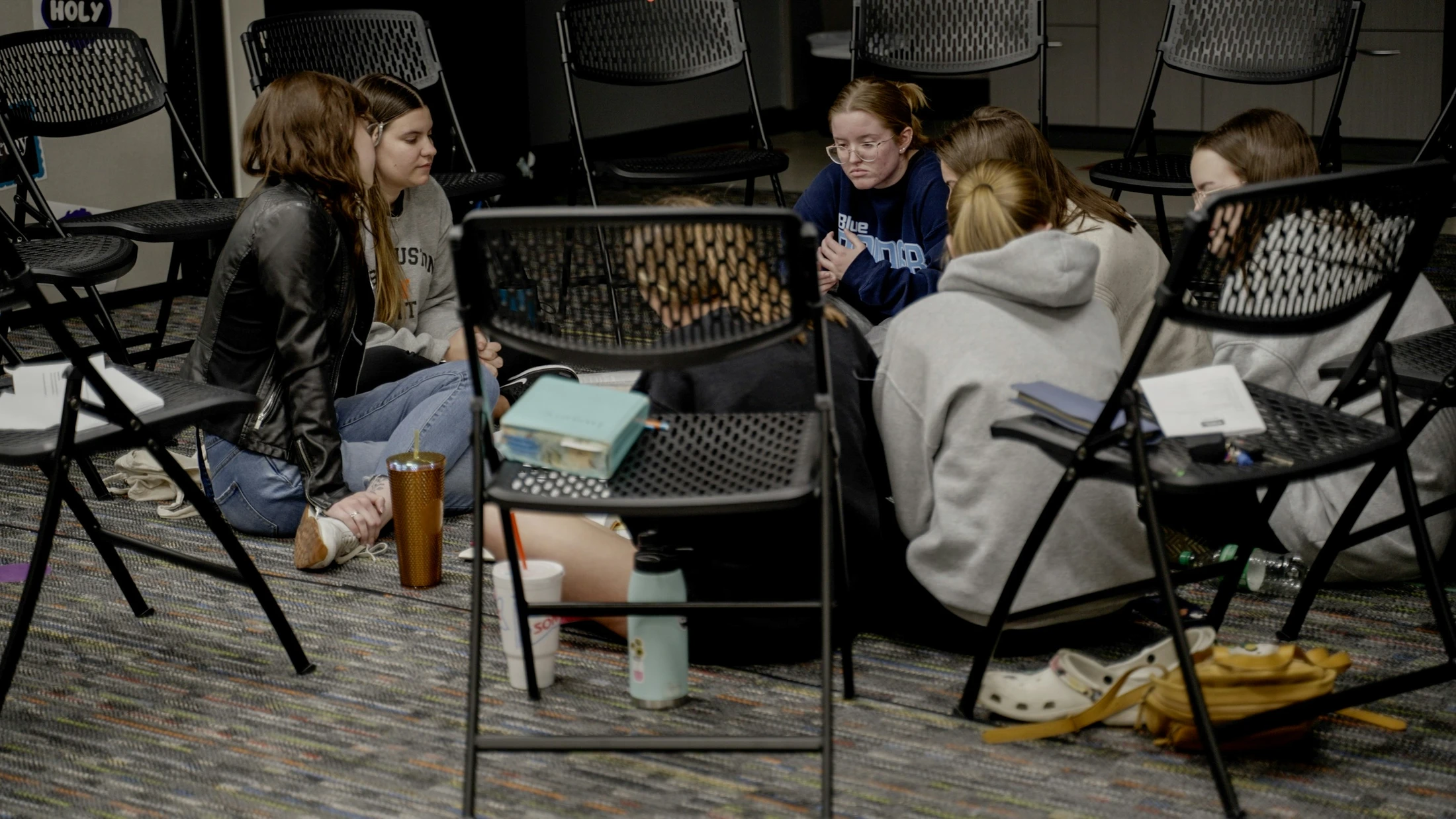
Something is stirring. Across Australia, America, the UK, and Europe, growing numbers of Christians are quietly walking away from Sunday services in large buildings and gathering instead in lounge rooms, around kitchen tables, in backyards. They're done with programs, overhead costs, and passive attendance. They want something real.
This deserves genuine celebration. What's driving it is often a sincere hunger for deeper community, more authentic discipleship, and a simpler, more relational expression of faith. Those instincts are right and worth honouring.
But as a community, we want to think carefully about what God is actually doing — because if we settle for the wrong answer, we might end up with a smaller version of the same problem we were trying to escape. The question isn't where the church meets. It's what the church actually is.
Let's start by widening the lens considerably.
The West Is the Quiet End of a Global Story
The conversation happening in Western countries — however genuine — is a small footnote to something far more extraordinary unfolding across the rest of the world.
Right now, in China, India, Iran, and across sub-Saharan Africa, we may be witnessing what historians will one day describe as the greatest expansion of Christianity in human history. And the vast majority of it is happening in homes, in secret, entirely outside any institution.
China is home to an estimated 60 to 100 million Protestant Christians — most connected to underground house church networks of ten to thirty people, meeting in apartments and rural homes, with no paid staff, no building, and no official existence. This didn't happen because Chinese Christians read a book about simple church and decided to try it. It happened because the Communist Party spent decades trying to destroy the church and instead accidentally multiplied it.
Believers like Wang Mingdao — who spent twenty-three years in prison rather than compromise his convictions — paid the price that produced this movement. Watchman Nee, whose writings shaped the theological foundations of the Chinese house church movement, taught from Paul's letters that the church was inherently local, accountable, and free from institutional control. His ideas, written in the 1920s and 1930s, became seeds planted in soil that persecution would later water with blood. What government suppression intended as destruction became the engine of explosive growth.
India tells a parallel story. Beginning in the 1990s, simple disciple-making movements began spreading through villages along family and community lines, without outside funding or leadership. One movement alone — among the Bhojpuri-speaking people of North India — grew from a handful of believers to an estimated one million within two decades. No buildings. No programs. Just ordinary people making disciples who made disciples.
Iran is experiencing one of the fastest rates of church growth on earth, almost entirely underground. The Islamic Revolution of 1979 expelled Western missionaries and made conversion from Islam a criminal offence. It didn't stop the church. It accelerated it. Hundreds of thousands of Iranians — many of them young, educated, urban people — are meeting secretly in small home gatherings at real personal risk. The house church in Iran is not a lifestyle preference. It is a daily act of courage.
Across Vietnam, Uganda, Ethiopia, Turkey, North Africa, and the Arab world, the same pattern repeats: small, relational, home-based gatherings of new believers multiplying rapidly in environments where larger, visible church structures would face immediate suppression.
Here is the important pastoral point in all of this. None of these believers chose the house church because it seemed like a more authentic ecclesiological model. They chose it because it was the only option available — and they made it work because they were willing to pay any price for the sake of Jesus.
When we in the West rediscover home-based gathering, we need to hold that with genuine humility. Our brothers and sisters in China and Iran are not meeting in homes because it's a trend. They're meeting in homes because Jesus is worth the cost. And they're paying that cost every single day.
To borrow their model without their surrender is to take the container and leave behind the content.
What Does "Church" Actually Mean?
Much of the house church debate hinges on a single word: church. Specifically, the Greek word behind it — ekklesia — the word Jesus used when he said, "I will build my church, and the gates of hell will not overcome it" (Matthew 16:18).
Some house church advocates argue that ekklesia by definition means a small, home-based gathering, and that anything larger or more organised has already departed from what Jesus intended. It sounds compelling. But it doesn't hold up when you actually examine the word carefully.
Ekklesia is made up of two Greek roots: ek (out of) and kaleo (to call). It means "called-out assembly." But here's what's often missed: in the first-century world, this wasn't a religious word at all. It was a civic and political term. The ekklesiawas the public assembly of citizens in a Greek city — the gathering called together to conduct the business of the community. It appears in the writings of Thucydides, Plato, and Demosthenes in exactly this sense. It carried no implication about size, venue, or structure. It simply meant: people summoned together for a serious shared purpose.
The New Testament uses ekklesia in three distinct ways, often within the same letter.
First, it refers to the entire global, historical body of Christ — every believer who has ever lived or ever will. This "church" has no address and no building. You can't attend it on Sunday morning.
Second, it refers to the church of an entire city — "the church in Corinth," "the church in Thessalonica," "the church in Rome." These were not single house gatherings. Corinth was a major commercial city with a population of perhaps 100,000 people. The community Paul wrote to had internal factions, leadership disputes, wealthy members and poor members, and a wide range of spiritual gifts requiring careful guidance. Paul addressed them as one ekklesia — one community, distributed across a city, accountable to each other across however many homes they were meeting in.
Third, it refers to small household gatherings: "the church in the house of Priscilla and Aquila," "the church in the house of Nympha." These were real, small, home-based communities — and they genuinely mattered.
The same word covers all three. And that is precisely the point. The New Testament writers had no interest in prescribing a specific size or venue. The church was defined not by where it met but by who it was: people called out of the world, gathered around the risen Jesus, and sent back into the world on his behalf.
To insist that the real church can only exist in a home is to take one legitimate expression of ekklesia and declare it the only valid one. The New Testament simply doesn't say that. It uses the same word for a handful of people around a kitchen table and for the entire body of Christ across the nations. That breadth is not a contradiction — it's a gift.
A brief note on history. The early Christians met in homes because that's what was available — not because the home was theologically prescribed. By the second century, Christians were already adapting spaces for gathered worship. By around 240 AD, in the ancient Syrian city of Dura-Europos, archaeologists have uncovered what appears to be the oldest known dedicated Christian meeting place: a private house converted into a worship space, complete with a baptistery and biblical murals on the walls. Christians adapted available spaces and built dedicated ones when they could. What never changed was not the venue. It was the community's character, commitment, and mission.
Across the centuries, every genuine renewal movement has made the same discovery. The Waldensians held their gatherings in homes and barns, not because they rejected dedicated meeting spaces but because they had been excluded from them. The Anabaptists met in homes and forests because the authorities were hunting them. John Wesley's class meetings gathered in cottages and workshops because England's parish churches had closed their doors to him. In every case, apostolic life broke out in whatever space was available. The space was incidental. The culture was everything.
What This Means for Us
As a church community, we think both of these realities matter deeply.
The global picture invites us into genuine humility. We are not pioneering something new. We are joining a wave that has been building for decades among people far more courageous than most of us will ever be asked to be. Their model is not what demands our attention. Their surrender is.
The lexical picture invites us into genuine freedom. God is not prescribing a particular form. He is calling for a particular people — called out, gathered around Jesus, sent into the world. That people can express itself in a lounge room and in a larger gathered community. It can look like a handful of believers sharing a meal and like a congregation of hundreds worshipping together. What matters is not the container. What matters is the content.
Next week, in Part Two, we'll ask the harder questions: what has actually gone wrong in Western Christianity, what the New Testament identifies as the marks of a genuinely healthy apostolic community, and how we can honestly evaluate whether we are becoming that — whatever form our gathering takes.
For Reflection This Week
Where do you see genuine apostolic life — the kind of costly, sent, multiplying community described in Acts — expressed most clearly in your own experience? What was it about that community that made it feel alive? Was it the form, or something else?
Glenn Bleakney leads Awake Nations Church and Awake Nations Global Network on the Sunshine Coast, Queensland