Join Us This Sunday!
Experience the Spirit's presence, powerful teaching, and authentic family at Awake Nations. Join us Sunday at 10am. Pastors Glenn & Lynn Bleakney.

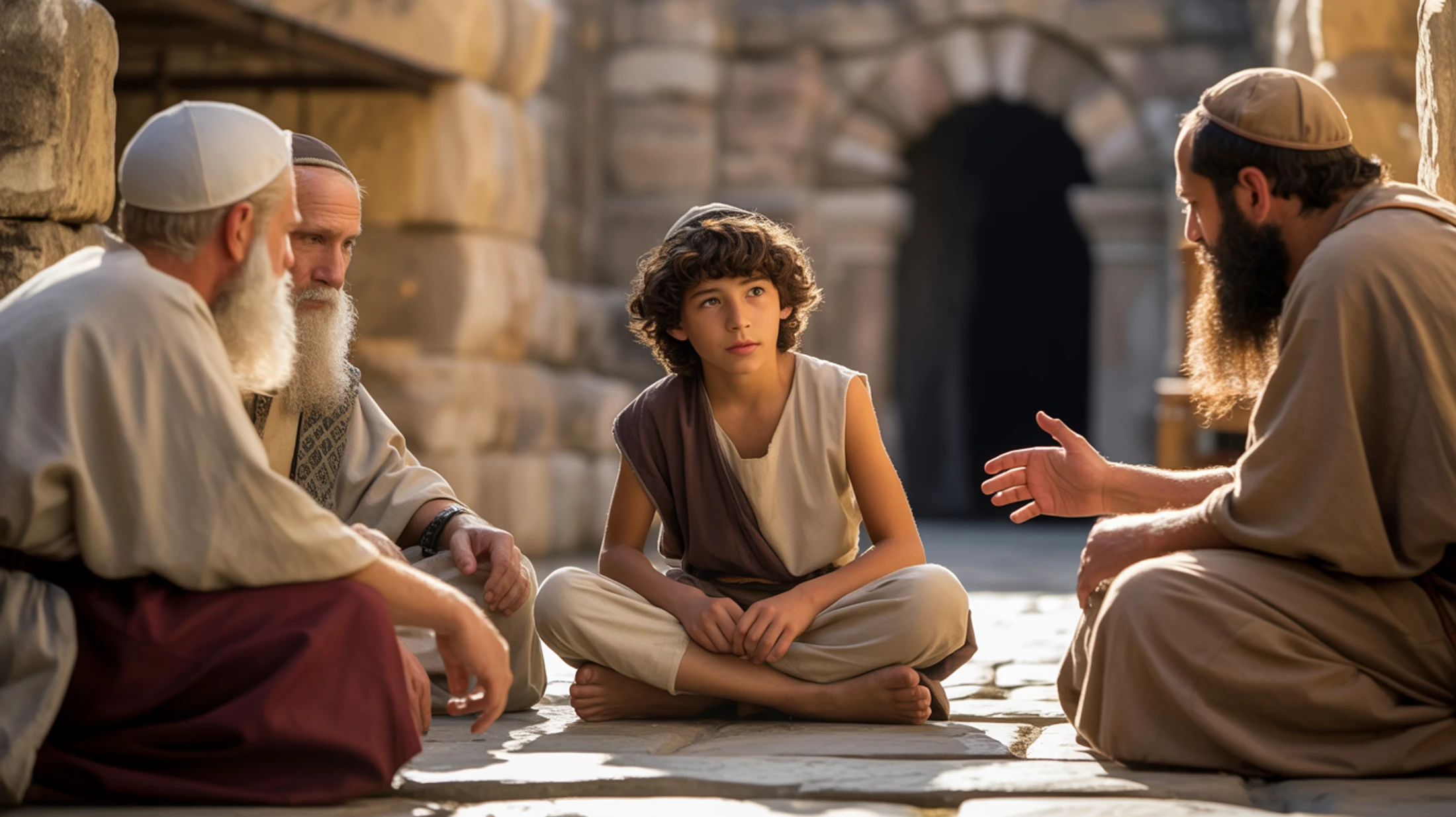
What if the most important thing Jesus ever did… happened before the miracles?
Introduction
Most Christians can explain the significance of the cross. Many can articulate why Jesus died and what His death accomplished. Far fewer, however, have paused to ask a more foundational question: Why was Jesus born—and why did His life unfold the way it did?
We often summarize the incarnation by saying, “Jesus was born to die.” While this statement is not incorrect, it is incomplete. Luke’s Gospel refuses to let readers move too quickly to the crucifixion. Instead, Luke slows the narrative and draws attention to something easily overlooked: the long, formative years of Jesus’ life—years marked not by public ministry, but by growth, submission, and ordinary faithfulness.
Luke’s insistence on telling the story this way is not accidental. It reveals a deeper logic of salvation—one that is not only about forgiveness of sins, but about the restoration and completion of humanity itself.
Luke’s Distinct Emphasis: Authority Rooted in Faithful Humanity
Each Gospel writer shapes his account with a particular theological aim. Matthew presents Jesus as Israel’s promised King. Mark emphasizes Jesus as the faithful Servant who suffers on behalf of others. John reveals Jesus as the eternal Word made flesh.
Luke, however, writes with a different concern. Addressing Gentile believers seeking certainty, Luke presents Jesus as the faithful Son whose authority is credible precisely because it is formed through obedient human life. Luke does not deny Jesus’ kingship, divinity, or mission—but he grounds them in lived faithfulness.
This explains Luke’s repeated emphasis on Jesus growing “in wisdom and stature, and in favor with God and man.” Jesus does not bypass human development. He embraces it fully. He learns, submits, waits, and matures within the ordinary structures of family, community, and time. The Son of God does not simply appear as Savior. He becomes one.
To understand why this matters, Luke’s story pushes us further back—beyond Bethlehem, beyond Israel, all the way to Adam.
The Deeper Problem: Adam’s Interrupted Vocation
Adam is not presented in Scripture merely as the first sinner, but as the first representative human. He was created to live in unbroken communion with God and to reflect God’s life into the world. Identity, obedience, and authority were meant to flow naturally from that communion.
When Adam sinned, the damage extended far beyond moral failure. Communion with God was broken. Human identity became distorted by shame. Humanity’s vocation to steward creation became frustrated and resistant. Sin did not simply alter behavior—it fractured human life itself.
If this is the depth of the problem, then salvation cannot be limited to forgiveness alone. Humanity does not merely need pardon; it needs restoration. Something that was begun in creation was left unfinished. Human growth toward maturity was interrupted.
Christ and the Completion of Humanity
This is where the early church’s insight becomes essential. Irenaeus described Christ’s work as recapitulation: Christ does not merely undo Adam’s failure; He completes Adam’s unfinished vocation.
Where Adam grasped prematurely, Christ waited.Where Adam distrusted, Christ obeyed.Where Adam fractured communion, Christ restored it.
Adam’s sin was not simply breaking a command. It was attempting to mature apart from God—to take hold of what could only be received through trust and obedience over time. Christ enters this story not by bypassing human development, but by faithfully living it through to completion.
Only God incarnate could do this. As Irenaeus famously summarized, “The Word became what we are, so that we might become what He is.” Not divine by nature, but restored to true humanity through communion with God.
This means Christ does not merely correct humanity’s failure; He carries humanity to its intended end.
What This Means for Us: Salvation as Participation
If Christ completes Adam’s vocation rather than simply reversing Adam’s mistake, then the Christian life must be understood as participation in restored humanity, not as an independent effort to achieve spiritual maturity.
Salvation, therefore, is more than a change in legal standing before God. It includes the healing and reordering of human life itself. In Christ, humanity is not returned to a neutral starting point; it is reoriented toward maturity. What was interrupted in Adam is carried forward, fulfilled, and now shared with those who are united to Christ.
This also reshapes how we understand growth and timing. Adam’s failure was marked by impatience—by seizing what could only be received. Christ establishes a different pattern. He submits to formation, obscurity, and delay. For believers, this means slow growth is not a spiritual problem to solve but often a theological necessity. God is not merely correcting behavior; He is completing humanity. That work cannot be rushed.
Sonship, Obedience, and Formation Under Pressure
The New Testament reflects this pattern through its language of sonship. Tekna describes children who belong by birth; huios describes mature sons entrusted with responsibility and representation. Belonging comes first. Authority follows formation.
Luke’s account of Jesus at twelve years old illustrates this clearly. Jesus knows who His Father is. He demonstrates unusual wisdom. And yet, He returns to Nazareth and submits. He stands at the threshold of maturity and refuses to seize authority prematurely.
Hebrews reinforces this vision with a striking claim: “Although He was a Son, He learned obedience through what He suffered.” This does not imply disobedience. It means obedience was fully embodied under real pressure.
Some aspects of formation can only occur in difficulty. Obedience becomes mature when it is sustained in resistance rather than convenience. Christ was not shaped by suffering alone, but by faithful obedience within suffering. For believers, this reframes hardship. Resistance does not necessarily signal misalignment with God’s will. Often, it is the context in which obedience deepens and humanity is healed.
Communion, Not Independence, as the Goal
Adam’s fracture began with the illusion that life could be secured apart from God. Christ restores the opposite truth: human life flourishes only in communion.
This redefines the goal of discipleship. The aim is not independence, self-mastery, or spiritual self-sufficiency. The aim is sustained dependence on God. Practices such as prayer, patience, submission, and trust are not preliminary stages of faith; they are expressions of restored humanity living as it was always meant to live.
This vision guards against despair by affirming that unfinished areas of life do not disqualify us—they simply reveal where formation is still underway. It also guards against presumption by reminding us that maturity cannot be seized or accelerated. Authority and fruitfulness emerge in their proper time as the result of faithful participation in Christ’s life.
Conclusion: Trusting God to Finish What He Began
Where Adam’s growth was interrupted, Christ completed the journey. He did not rush maturity or grasp authority. He entrusted Himself fully to the Father, carrying human life to its intended end.
Importantly, Christ did not complete humanity instead of us in a way that leaves us passive. He completed it for us and with us, reopening the path for our own restoration and formation.
The Christian life, then, is not a frantic attempt to become something new. It is a faithful participation in what Christ has already completed—allowing God to finish in us what He has finished in His Son.
In Christ, humanity’s story is no longer stalled. It is moving—slowly, faithfully, and securely—toward the maturity God always intended.