Join Us This Sunday!
Experience the Spirit's presence, powerful teaching, and authentic family at Awake Nations. Join us Sunday at 10am. Pastors Glenn & Lynn Bleakney.

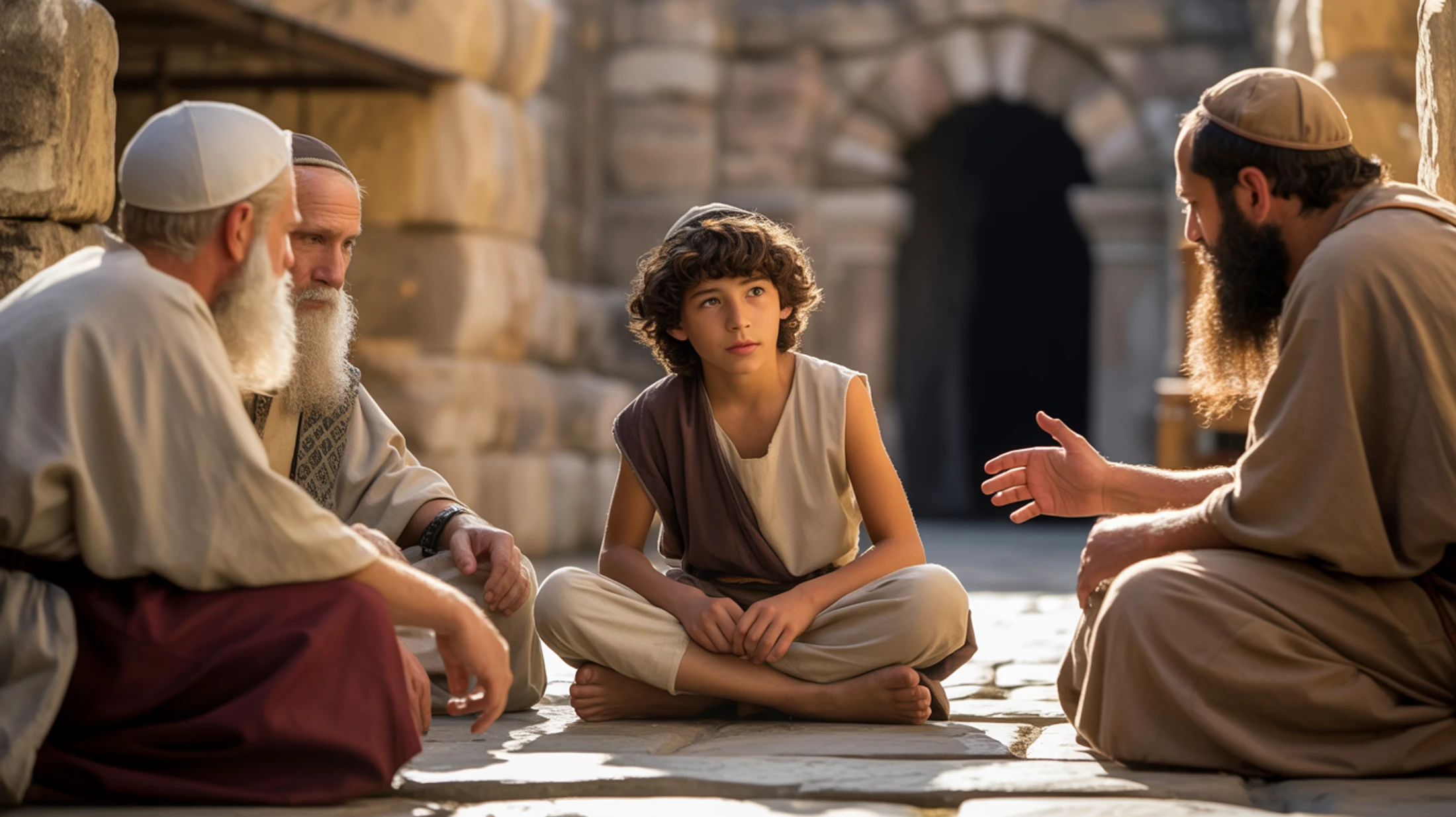
We often say “Jesus was born to die.” True—but incomplete.
In this episode, we slow down where Luke’s Gospel insists we slow down: the hidden, formative years of Jesus’ life. Years not marked by miracles or crowds, but by growth, submission, waiting, and ordinary faithfulness. Luke refuses to rush us from the manger to the cross, and in doing so, he reveals something essential about salvation itself.
This conversation explores why Jesus didn’t bypass human development—and why that matters profoundly for how we understand redemption, maturity, and spiritual formation. Drawing on Luke’s unique theological emphasis and the early church’s vision of recapitulation, we trace the story back to Adam and uncover a deeper problem than guilt alone: humanity’s interrupted vocation.
We’ll examine how Christ doesn’t merely forgive sin but completes humanity, carrying human life to its intended end through faithful obedience, communion with the Father, and patient formation under pressure. From Jesus at twelve years old to Hebrews’ claim that the Son “learned obedience through suffering,” this episode reframes growth, delay, and resistance—not as failures, but as necessary contexts of restoration.
If you’ve ever felt frustrated by slow progress, unseen seasons, or unfinished areas of your life, this episode offers a different lens. Salvation is not independence or self-mastery. It is participation—sharing in the finished work of Christ as God patiently completes in us what He has already completed in His Son.
Humanity’s story is no longer stalled. In Christ, it is moving—slowly, faithfully, and securely—toward the maturity God always intended.
From the beautiful sunshine coast of Australia, this is the Awake Nations Ministries podcast equipping the church for Revival, Reformation and Kingdom Impact. Learn more about us by visiting awakeaus.com so we're in Luke, chapter two. I want to read starting in verse 4040.
So this is a passage that is all about Jesus childhood. Okay. And the context, of course, is it was the day in the time of purification that Mary, Joseph, and Jesus went to the temple, and there was a purification ritual they went through. And then after that purification ritual, what took place is Simeon spoke, prophesied, and then we've got Anna prophesying. It's amazing, right?
A powerful testimony of who Jesus is as Messiah. And then what happens is they return back to Nazareth in Galilee. And it says, we'll pick it up in verse 40. Verse 40 says here, and the child grew. Watch this.
And became strong in spirit, filled with wisdom, and the grace of God was upon him. Some translations say in the favor of God was upon him. It's the word Charis. In Greek, it means favor or grace. Okay.
And then it says, his parents went to Jerusalem every year at the feast of Passover. And when he was 12 years old, they went up to Jerusalem according to the custom of the feast. When they had finished the days, as they returned, the boy Jesus lingered behind in Jerusalem. And Joseph and his mother did not know it, but supposing him to have been in the company, they went a day's journey and saw him among their relatives and acquaintances. And so when they did not find him, they returned to Jerusalem seeking him.
Now. So it was that after three days, they found him in the temple and sitting in the midst of the teachers, both listening to them and asking them questions. All who heard him were astonished at his understanding and answers. So when they saw him, they were amazed. And his mother said to him, son, why have you done this to us?
Look, your Father and I have sought you anxiously. And he said to them, why did you seek me? Did you not know that I must be about my Father's business? Some translations say my Father's house. Well, the word that is used here in the New Testament language isn't the typical word for work or the typical word for house.
So it's a very. It's a different word. And now he's about the Father's business. He's about it. He represents our house is a better way to say it.
He represents our household, which includes our business and everything. Does that sound familiar? The Father Jesus, who became the we us of the Father, the perfect Son. Right. So this is what's happening.
Okay. And then it says, but they did not understand the statement which he spoke to them. So Mary and Joseph. Right. Like, who is this kid?
Like, he's kind of brilliant, but I mean, but keep in mind, like, he's not done any miracles yet. Right, Right. And there's these extra biblical literature, pseudopigraphical, they call it, which is actually, there's one called the Gospel of Thomas. It's fake. Okay, keep that in mind.
But it talks all about all the miracles he did when he was a boy. Right. But no, he didn't do any miracles. And there's a reason for that. We'll see that today.
They didn't understand it. Okay, Then it says, then he went down with them and came to Nazareth and was subject to them. He submitted himself, in other words. But his mother kept all these things in her heart. She pondered in her heart.
Then verse 52, Watch this. And Jesus increased, saying, increased. I thought he was perfect.
How can you increase if you're perfect? If you know all things, how can you increase? But Jesus increased in what, wisdom? Stature and in favor with God and man. All right, okay.
So we're going to go a little deep today. So this is something that we really need to understand as Christians, because this is going to change our lives. Because there's a lot of stuff that we put up with and we tolerate because we don't understand what Jesus actually did for us. Why is it that we don't fully grasp everything Jesus did for us? Because we, this time of year at least, we talk about his birth, his coming, right?
And then we go. Miracles, preaching, casting out demons, go to the cross, die, raised to life again. Holy Spirit comes, revival breaks out, Book of Acts. We love all that. But we miss this part right here.
We miss this right here. See, most Christians can tell you why Jesus died or perhaps even how he died. But fewer have stopped to ask why he was born. Why was he born? See, this is a powerful thing because Jesus came to the earth to live.
To live, not just to die. We often say, well, the reason he was born was he was born to die. And in one sense, that's true. Obviously, the cross is the. The pinnacle of the gospel, the center point of the gospel.
But Luke, like no other gospel writer, refuses to let us rush there. He's like, no, stop. We're going to look at this story of Jesus as a boy, as a child. Okay, so Luke saying, we're not jumping into the miracles, the crowds, the conflict he had with the Pharisees, even the cross. He slows down the story and he says, let's fix our attention on something.
To be honest, we'd rather skip by most of us. And you'll understand in just a moment. Jesus is growing, he's learning, he's submitting, he's increasing long before he heals the sick, cast out demons, or proclaims the kingdom. And so Jesus did not simply appear as savior, like drop down from heaven to earth. No, he became one.
So theology is what they call ontology or ontological. Ontological means being, being. So a lot of times we talk about doing, don't we? We love to do things. And Jesus did many good things.
Acts 10:38. He went around doing good and healing all that were oppressed of the devil. For God was with him. He was anointed with the Holy Spirit and power. But being has to happen first.
And this is something that we miss in our modern culture. See, but Luke, in his Gospel, he. He literally stands out because his gospel is unique. Do you know that every gospel for them had a very unique purpose for being written. So why was Matthew written?
And to whom was Matthew written? Matthew was written to the Jews to show Jesus as the king of the Jews. Mark was written to Christians who were suffering, most likely in Nero's time. And it shows. It literally jumps like there's.
There's no birth narrative. It's just immediately, right straight away, Jesus is. It's moving fast. He's healing, he's doing all these things. But you'll see in Mark, if you read it carefully, that he's emphasizing Jesus as a suffering servant.
Now, John, his gospel is really different. He writes to secure belief, revealing Jesus as the eternal Son of God, the Word made flesh, so that readers may believe and have life in his name. He came from heaven to earth because there were many that honestly didn't understand Jesus humanity. But the. The point is, we are talking about something here that is very different.
When we read Luke's Gospel. Luke is writing to Gentiles. Now look at Luke chapter one, verse four for a moment here, guys. We're going to look at this. Luke, chapter one, verse four.
Many of us are familiar with this. Obviously he's writing to someone named Theophilus. Sorry, Luke, chapter one, verse three. It seemed good to me. Also having had perfect understanding of all things from the very first, to write to you an orderly account.
Most excellent, Theophilus, that you may know the certainty of those things in which you were instructed. So, Theophilus, which means a lover of God, that's the meaning of the word. Theophilus is actually. Most scholars believe it was a real person. It's not just, you know, a symbol for.
For believers in general. Perhaps he was a lawyer, some would argue. Others would say he's some type of royal official or dignitary. Most excellent, Theophilus. So there's something about him as a person who's not part of the faith, as an outsider who stepped into this, and perhaps because during that time there was a lot of questioning, there was a lot of skepticism even regarding this belief, this new religion, as Jesus as Lord and Savior.
So he actually writes to emphasize Jesus humanity. And of course, we know that Luke, the doctor who traveled with Paul, is the one who wrote these words under the inspiration of the Holy Spirit. He also penned another book. What book was that? The Book of Acts.
Right. And he kicks that off in the first chapter by saying, in my former account, O Theophilus. And so he continues. And he said, I told you what Jesus did up until the day of his suffering, and so forth. And then.
But the thing about him, what he's actually doing, is he's showing Jesus as a perfect son of man. And he emphasizes prayer more than any other writer and Holy Spirit more than any other writer. Put it together. What is he saying? Jesus, who 100% God.
We mentioned last week, Philippians 2, right. He. He set aside. He emptied himself. That's the doctrine of kenosis, not ketosis.
Kenosis. And kenosis literally means to empty yourself. Jesus emptied himself of. Not of his deity, but of his attributes. And depending on those attributes, he's always God.
100. But he. He just said, look, I'm not going to use all the power that's mine, the position that's mine. I'm going to humble myself. I'm going to come to a place of obedience to my Father, and I'm going to be filled and regulated and controlled by the Holy Spirit and everything that I do.
So what do we see? We see a perfect man, 100 God, 100 man living on the earth as one who depends on the Holy Spirit, as one who is filled with the Holy Spirit, anointed by the Holy Spirit. Acts 10:38. Again, Luke writing. And how does he access this power and presence?
Prayer. Prayer. His prayer shows him as the perfect man, the one who came. It actually says in 1 Corinthians 15:45, he is the last Adam. The last Adam.
It's the word eschatos. We get eschatology from it. It means final. None other. There's not going to be another one.
Final. He's the final atom. The first Adam stuffed up. But he says something interesting in that verse. He says the first Adam, the real Adam, was a living soul.
The last Adam became a life giving spirit. Now, interestingly, what does that mean? It means this. The first Adam received, God breathed into him. It became a living soul.
Nephesh. But this second Adam, what happens is he is actually the author of life. He's the one that imparts life. He's not just receiving like a man. There's something different about him.
So Luke doesn't deny his kingship. He doesn't minimize his suffering and he doesn't weaken his divinity or his deity. But he grounds all of it in faithful humanity. Luke presents him, as I said, as this last Adam. And he keeps bringing us back to something quiet and slow.
Quiet and slow. Quiet and slow. Quite slow, guys. 30 years preparation, three years ministry. 30 to 1.
30 years preparation, three years Ministry. Lord, why aren't you giving me my breakthrough? Why aren't you opening the door? Why aren't you?
Jesus grew in wisdom. He grew in wisdom and in stature, physically and in favor with God and man. Not just spiritually, but he was fully human. He learned. He learned.
He submitted, he waited. He lived an ordinary life for decades.
So Luke is like this one. Yeah. He's the Son of God, but he had to grow. He's the Savior, but he had to develop. He's the Messiah, but he had to be formed.
So here's a question. If salvation only requires the cross, why did Jesus spend years growing up? Come on now, I'm going to show you. The early church fathers did not believe what we believe. The patristic fathers.
We'll start off with Irenaeus, second century. The point is this. If the cross. Jesus came just to go to the cross. Yeah.
Then why did he have to be tested? Why did he have to wait? Why did he have to live and minister for three years, suffer and suffer so much? Well, Luke says he submitted, he learned. Listen, he lived in obscurity.
He lived in probably. He took the rubbish bins out. Guys, like, seriously. He cleaned the toilet. He did these ordinary, mundane, menial things while he's growing.
He didn't say, hey, I'm the Son of God. You don't know who you're talking to, Mom. Like, tell dad to put the rubbish out. You know who you're talking to. Evidently you still haven't learned anything from that time in the temple.
So the point is, Jesus lived as one of us. He Lived as one of us. So he didn't simply arrive as Savior. He became one. Oh, I want to say that again.
He didn't simply just arrive on the earth as Savior. He became one. All right, let's go over to Hebrews 5 for a moment, and I'll show you where it says this. Hebrews 5, 8, and 9. You ready?
Though he was a son of He, Us. Though he was a son. What? The Son of God? Yeah.
What. What does say He? He was a son, yet he learned obedience. He learned obedience by the things he suffered then. Verse 9.
And having been perfected, he became the author of eternal salvation to all who obey him. Whoa. So what it says here, although he's the Son, he's. He's the perfect Son of God. He learns obedience by the things that he suffers.
And then what happens is he becomes the author of salvation to all who believe, to all who trust in Him. So there's a process of suffering that he goes through, which culminated in the cross. But it started the moment he came to planet Earth. He suffered. He was a human.
He knows what it's like. He knew what it was like to go through all of the things, the frailties, the. The infirmities, the weaknesses, the trials, the testings, everything that we went through. Yet he was without sin, never sinned. He was perfect in all his ways.
So he became the captain of our salvation by what he suffered. Okay, watch this. So this is what Irenaeus calls recapitulation. Okay, let me explain it to you. The early church, Father Irenaeus, he was in the second century.
He helps us see the depth of what Christ came to do. Okay, so watch this. For Irenaeus, Adam didn't just sin. Okay? He did sin, of course.
But his development was never completed. It was interrupted and left unfinished by rebellion. So what is. What was Iranian saying? He was saying this, that Adam was not created at the finish line.
Adam, before he sinned, he wasn't created at the finish line. He was created at the beginning of a journey. So what was that? That humanity that was created good was still meant to grow, was meant to mature through trust, obedience, and communion with God. But instead of trusting God and growing into maturity, Adam reached ahead of time.
And Adam tries to take for himself what could only be received by remaining with God. So understand this. Sin wasn't just breaking a rule. It was trying. Watch this.
Sin is trying to move into your destiny, move into your calling, move into anything without doing the journey. That's sin. Sin means to fall short. Literally. It's a shortcut.
Oh, I want God to bless me. I want him to do this. I want him. And God's like, all right, it's time to go on the journey. It's time to grow.
So salvation involves more than pardon. It involves completion. And this is exactly what Iranius calls recapitulation. Recapitulation. Is this Jesus, as we've already mentioned, 1 Corinthians 15:45, he's the last Adam, right?
So Jesus, what does he do? What Adam failed to become, he became.
Where Adam disobeyed, he obeyed. Where Adam grasped prematurely, Christ waited faithfully. Where Adam broke communion, Christ restored it. So Irenaeus understood clearly that no mere human could do this, right? I mean, only God incarnate could.
And this is called re heading the human race. So it goes back to a verse in Ephesians that essentially says this, that Adam, who was the head of the human race, he disqualified himself. So Jesus becomes the new head of the human race. So Jesus is one who goes before us. And literally, this is what some of the ancient fathers said.
The word became what we are in order to make us what he is. Another writer said this. He became human so that we might become divine. Now, not divine by nature, not divine in essence. There's only one God.
We're never going to become God, but we're called to partake in his nature. 2 Peter 1, 4 partakers of the divine nature. So we're called to share in his life, sharing his likeness, his image, and his very nature. So this restoration has a direction. It's always moving towards maturity.
Okay, now here's. We'll go back to Adam and unpack this a little bit further. So let's talk about Adam's fracture of communion, identity, and dominion. Scripture presents him as more than the first sinner. Isn't it true?
Like, it depends on what your background is, your church background. You know, a lot of Christians, more kind of traditional church backgrounds, they look at Adam and they go, oh, yeah, that's a bloke that stuffed up in the garden. The interesting thing is he was also the first representative human. He was created to live in unbroken communion with God and to reflect God's life into the world. So Adam was actually meant to live from God.
This is a truth that many Christians struggle with. And this is where performance and insecurity and all these things get in the way, is we don't live from God. We try to live for God rather than living from God.
But when we live from God, that's identity. That's communion. That's oneness. And we live from that place. And it's completely different because it's supernatural.
So when Adam sinned, there was a rupture that took place. And this rupture wasn't just moral. I'll give you three words. The first word's quite easy. It's relational.
First of all, the rupture was relational. Secondly, it was ontological. And thirdly, it was vocational. What does it mean? Relational?
His relationship with the father was affected, right? Obviously. Clearly, what ended up happening is Adam withdrew trust from God. He chose independence over communion, self definition over received identity. Guys, that's pretty deep.
That's pretty deep. Adam withdrew trust from God. He chose independence over communion. I can do this. I'm good.
I can make it happen. Self definition over received identity. Self definition over received identity. When we try to make ourselves something right, when we create after our own image and likeness.
See, many people do that, even in the church. So Genesis 3 shows us the scope of the fracture. Communion was broken. Adam hid from God. Identity was distorted.
That's the ontological piece. Being identity was distorted. Shame entered humanity.
Dominion was compromised. The ground, even the ground, the earth resisted human stewardship. Whoa. The ground's resisting human stewardship. Do you recognize that right now?
The one that said, I. I created you in my image and likeness, you know, to. To be. He says, go, be faithful, multiply, subdue the earth, have dominion, right? And then because of the curse, what happens is the grounds of pushing back and saying, I'm not letting you have dominion over us, even the ground. That's why Romans 8 talks about creation, groaning for the manifestation of the we, us, sons of God, the restoration, right?
The Jews taught resurrection and restoration of the earth. They didn't teach what many of us believe about go to heaven and we float around in the clouds. That's Platonic. That's a Greek philosophy. The Jews taught restoration and resurrection.
So what does that mean? It means that the earth that was created to be a blessing, to be fertile, to be fruitful, becomes what? Something that resists the very will and purpose and calling of God's servants. So this is a powerful thing. So every generation after Adam inherits separation, shame, fracture, futility, and death.
Let's move forward. We've already talked about this technon and Huyas. You're born a technon. The Greeks would say, you're born a child. And it's a beautiful word.
It means you're beloved, you're part of God's family, but you're a Child. And you're always a child, right? You can have a 30 year old, but they're still your kid. But the, the point is you're always a techno and it means you're always a beloved child of God. But there comes a point where you are to grow and to become what the Greeks called a real son.
And a we are son is mature and represents the father well. And in the Bible times, there's actually two different cultures. Obviously we see the Jews and then we see the Greeks. And so we, what we see in the Bible times is really, it's kind of a prototype of what we call bar mitzvah. Now bar mitzvah means in Hebrew, son of commandment.
So what we understand is there came a point around 12, but then 13, where the child was recognized as son of the commandment. And they had the right to read the scripture in the synagogue. Means they were responsible, they were considered as an adult in the sense that they were at least in the early stages. And so this was something that was really powerful. And so in Jewish life this transition occurred.
And so when we see Jesus in the temple, it's speaking of something happening here. He's transitioning into wheels. He's transitioning. You had to show that you were mature. And once you were able to demonstrate that, then you were recognized as coming of age.
And there was actually a response. There was a ceremony that took place. Now, in Roman culture, the same reality happened publicly. A boy lived for years under his father's authority, learning discipline and restraint. Then at a ceremony, he laid aside his childhood garments.
Okay, in Latin it's called toga prataxa. Toga prataxa. Toga prataxa was a robe that those boys would wear. And it had this wide purple border. But when you came of age, when you became recognized, as we ask you, actually at that point, that robe was removed and a new robe was put on you, called a toga robe.
We realis atoga we realis. In Latin, togo we realis is now you're an adult, now you're a mature son. You represent your father well. You can do business for your father. When they would say, if you've seen me, you've seen the father, that was a statement that would literally happen often at that ceremony where they would say, now this is my beloved son with whom I'm well pleased.
And it would say, look, if you see him, you see me, do business with me. Go through him now.
So in both cultures, sonship, maturity, we us was never rushed. Never rushed. Well, you know What I love about it, belonging came first. Belonging came first. Just be a kid, right?
Just be a kid. Play, have fun, grow up, do stupid things, we'll correct you. But, you know, just be a kid, Go on the journey. And what happens today in too many places is we see individuals that are gifted, gifted, and we encourage them. God has a call on your life.
You need to step out into ministry. I can tell you person after person that we've known, and back in the day, God was using them powerfully, and they're not even walking with God. Many of them today, and many people that were around them were saying, hey, you know what? You're gifted. You have an anointing.
You flow in miracles. You, you need to get out there, we need to promote you and encourage them rather than saying, hang on a minute, slow down, let's take the next 30 years. No, let's develop you. Formation, character, maturity. Let's develop you so that no matter what happens in life, you will have the foundation.
You will. You're established and you're not going to blow up, implode. That's what God's looking for. And so Jesus, he already knows who his Father is. He speaks with clarity about belonging, shows unusual wisdom and understanding.
Then he returns to Nazareth and submits and submits.
He's standing at the threshold of maturity. Yet he refuses to seize authority early. Yeah, formation and obedience.
Look at this. Hebrews 5. Add again, right? Although he's the Son, he learns obedience. Learns.
Jesus, learns obedience. It doesn't mean that Jesus was ever disobedient. Kind of like you said to your kids, I'll teach you something. You know, you need to learn something. What does that mean?
You did something wrong, you're in trouble. I'll teach you a lesson. No, that's not what he's saying. He didn't do anything wrong. He wasn't disobedient.
This word, learned, means obedience that is experienced as a result of living under pressure.
Obedience that is lived out fully experienced, fully expressed under pressure. So obedience for Jesus wasn't theoretical. It was embodied. It was tested. It was carried all the way through.
Now, here's the thing about pressure. Anybody ever feel under pressure? Okay, that's good. Honestly, Paul said this. Can I quote the Apostle Paul?
Are you ready? 2 Corinthians 1:9. He said, yea, we have the sentence of death in ourselves. That we might not trust in ourselves, but in God who raises the dead. And what's he talking about?
Pressure, difficulties, trials. He's being persecuted. And he goes, it's like, I feel like I can't go on the sentence of death. And he goes, the purpose for all of this is that we wouldn't trust in ourselves, but in God who raises the dead. So Jesus learns obedience by the things that he suffers.
So let me just remind you, because a lot of times, here's what happens, guys. We go through pressure. We go through difficult times and seasons in life. And what do we want to do? Run.
Run. Right. Can I remind you this morning that oil comes through a crushing process, that diamonds are formed and forged as a result of pressure.
If we are going to shine, if we're going to carry the anointing and do everything and be everything that the Father's called us to be, we are going to have to learn obedience through suffering.
It's not some sadistic thing like, bring it on, I want to suffer. We're not talking about that. But when pressure comes and obedience becomes costly, our instinct is to escape. We look for relief. We pray for removal.
We assume God's will must be somewhere else. This is getting too hard. This is too difficult. Let's move on. Let's find the next place.
And there's a problem with that. You know what the problem is? Wherever you go, there you are run off. But the fact is, we run, we move on.
But not Jesus. Jesus learned obedience by the things he suffered. And what happens? He now becomes qualified. He's perfected.
It means he's complete. He's mature. To become the author of salvation is what it says, verse 9 of Hebrews 5. So he had to go through it. And the doctrine of recapitulation is that our human life literally needs redeemed through every age, every generation, the journey.
So Jesus did the journey through the generations. And because he was perfect, because he was fully obedient, even though it was difficult and he was tested and tried, he redeemed and recapitulated what Adam wasn't able to complete. It's not just, oh, he died on the cross. No, no, he did the journey, guys. He lived through the generations.
He came as a baby. He was a toddler. He was a young child. He became a youth. He became a young adult.
He grew up. He went through it all. He knows what it's like to experience all of the testings and trials and things that happen to us in life, but yet he never sinned. So think about this.
We're under pressure, okay? We're suffering, man. I'm really tempted right now. I'm tempted. I'm tempted to do something Wrong.
I'm tempted. And what do we do? Shame the devil. How do we shame the devil? We contradict.
We do the opposite. So we shame the devil. So what do we do? When you feel tempted and you want to succumb and do something that's wrong, what do you do? Go.
Get in the word of God. Pray. Worship. Declare his holiness. Declare that you're holy, you're righteous.
Declare that your body is the temple of the Holy Spirit. Declare that your mind will only think his thoughts, your hands will only touch what is pure and righteous, whatever it may be. Shame the devil. When you're discouraged and you don't feel like going to church, you don't feel like praying, what do you do? Shame the devil.
Pray. Worship him. Declare in Jesus name, Lord, you're good and your mercy endures forever. Bless the Lord. O my soul and all that is within me.
At times my soul doesn't feel like blessing God, but I'm speaking to my soul and saying, so you're going to bless the Lord. You're going to bless him. Whether you feel like it, whether you want to, you're going to bless Him. So obey when there's no applause, no recognition, keep serving. Resist even without relief.
Trust when you can't see the way forward. Worship when you don't have the feelings. Remain faithful. When you're hurting, bite your tongue and speak in tongues. Better yet, begin to do the opposite.
Trust him. Trust him. Worship him. You need to learn obedience through suffering. Come on now.
See, we want panacea. Boom. Jesus, come down and pearl, do this and do that and open the door and smite my enemies and promote me to the moon and back. And we just want all of this stuff. And God's like, no, go on the journey.
I'm more concerned about who you are and who you're becoming than what you do and the opportunities and the platform. So what we understand about Jesus is that he went on the journey, he was submitted to his father, he literally related to us and recapitulated everything. So he didn't complete human maturity instead of us, as though we're now left to struggle on our own. He completed it for us and with us. And he opens the way for our lives to be healed, restored, informed from the inside out.
Guys, that's it. So what is he saying? He's saying, are you committed? Will you go on the journey? I've made a way.
I've made a way. My power in you. But go on the journey. Go through the pressure when you're broke and you don't have any money and you don't know how you're going to survive. Can I tell you?
One of the best things you can do is tithe and give money to God. We don't tithe in the good times.
Tithe when it's difficult, the widow's mite. Give when it doesn't make sense. Pray when you don't feel like it. Worship when you're discouraged. Declare the blessing of God, even if it looks like you're not blessed.
I am blessed. I am blessed. And I thank you, Lord. Discipleship is not to hurry, guys. It's to remain.
It's to trust the process. It's to stay obedient even when the way forward feels hidden. Because the God who finished the human story in Jesus has not lost interest in yours. The God who finished the story in Jesus, the last Adam, has not lost interest in your story. Guys, we are so blessed.
We have so much to be thankful for. So much. He's so good. He's so amazing.